The Route I’d Send a Wheelchair User First: A Newmarket Race-Day Access Audit
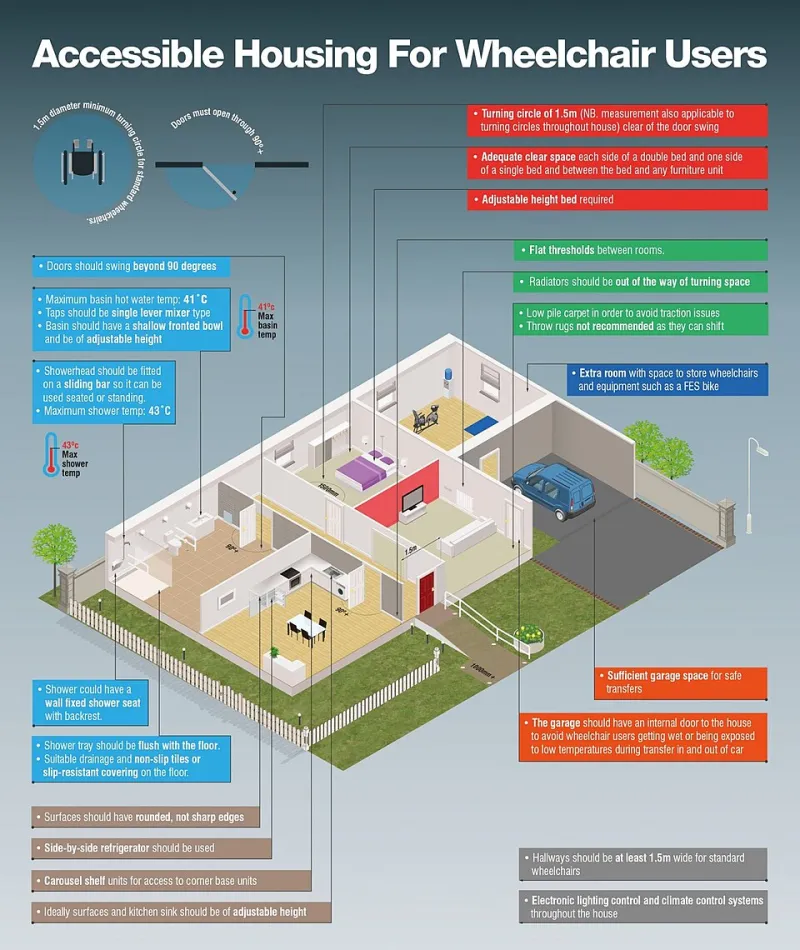
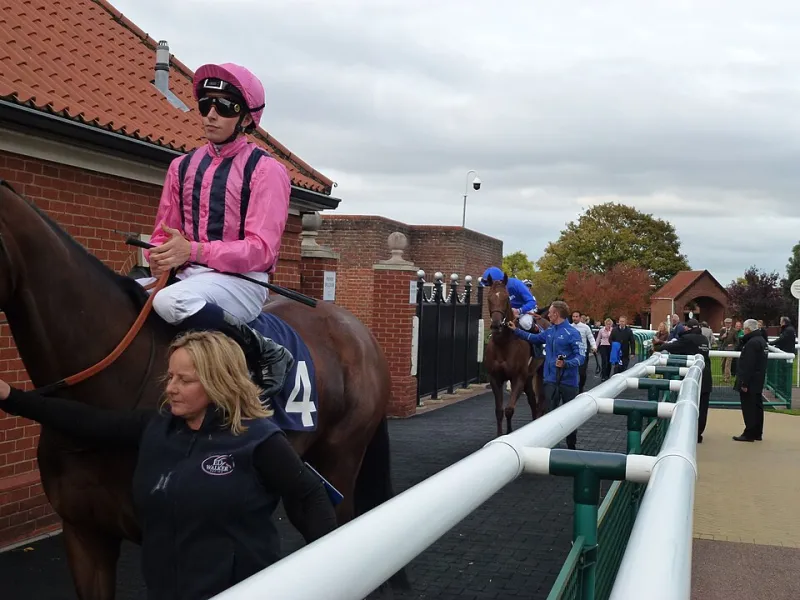
Photo: tedparker1, CC BY 2.0, via Wikimedia Commons
Accessibility at Newmarket is not a single gate you can point at. The Rowley Mile and the July Course have different shapes, different crowds and, on the day, different pinch points. What follows is a field guide rather than a brochure: the route I would send a wheelchair user, a cane user or a parent with a pushchair on first, the questions to ask before booking, and the frictions that still show up in 2026 even when the ramp is technically there.
Start before the car park
The most useful accessibility work happens before you leave the house. Ring or email the racecourse after you have picked a fixture, not on the morning. Ask five things: where the accessible drop-off is; whether Blue Badge parking is in the main car park or a separate area; whether a companion ticket is included or needs to be booked; where the accessible viewing areas are for that specific course; and whether any lifts, gates or toilets are out of action. Answers change by fixture, and a big Saturday is not a quiet Tuesday.
Do not assume that a ticket scanner, a restaurant and a viewing platform all sit on the same level. Ask for the route in stages: car park to gate, gate to paddock, paddock to rail. If you use a mobility scooter, say so. If you need to avoid gravel, say so. If a member of your party cannot stand for long, ask where the seats are between those stages. The racecourse should be able to answer; if it cannot, that is useful information too.
The drop-off test
Drop-off is the first real test. A signed accessible bay is no good if it is 400 metres from the entrance you actually need. I would rather be set down close to the main gate and have the driver park elsewhere than be parked neatly and then face a long push over uncertain ground. Taxis should be booked for the return leg before the last race, not after the roar has died and everyone is walking the same way.
At both Newmarket courses, staff at the gate are the people who know which route is flattest today. Ask them. Do not rely on a map printed weeks ago, and do not be shy about saying you need the short way round. The short way is often behind a rope or through a gate that looks closed; staff can open it.
The first hundred metres
The first hundred metres tell you a lot. Tarmac is fine; loose gravel, wet grass and a cambered path are not. A pushchair and a wheelchair can both be caught out by the same drainage channel. If it has rained, ask whether the grass route is firm enough. If it is hot, ask where the shade is. These sound like small things. They are the difference between arriving at the paddock fresh and arriving cross.
Queues are the next friction. Bag search lines can be tight for a wheelchair or a mobility scooter, and a companion may be waved through separately. Tell the steward you are together. Most are excellent at this; the system works better when you speak up early rather than at the scanner.
Seeing the race, not just being there
Being allowed in is not the same as being able to watch. Ask specifically for accessible viewing, not just a place on the concourse. At the Rowley Mile the long straight gives you a wonderful sense of pace, but sightlines over crowds are the thing to check. At the July Course the garden setting is lovely, but grass and slopes are part of the deal. A raised viewing area, a reserved rail spot or a spot near a big screen can transform the day.
Arrive early for the first race you really care about. The best accessible spots are not secret, but they do fill. If you are with a group, agree a meeting point that is not in the middle of a bar. The paddock rail is good for seeing horses; the pre-parade ring is often calmer.
Toilets, lifts and the bits nobody puts on a map
Accessible toilets should be checked on the map before you go, and checked again with staff on arrival. Some are near the main grandstand, some are in the hospitality areas, and some are busier than you would like. A RADAR key is useful if you have one, but do not count on every lock being the same. Lifts are the other pinch point: a lift to an upper floor is no use if the queue is 20 deep and the stairs are the only other option. Ask whether there is a staff-operated route.
Rest stops matter. Benches, quiet corners and a place to sit down for five minutes are not luxury items. Nor is a dropped kerb. If you use a cane, the walk from the car park to the far rail can be longer than the racecard suggests. Build in a stop.
The small frictions
The frictions in 2026 are rarely dramatic. They are counters that are a little too high, doors that are heavy, a bar queue that swallows a companion, a betting window that is hard to reach from a seated position, or a steward who gives directions to the nearest ramp but not the shortest one. They are weather and ground conditions. They are the return taxi that cannot get near the gate because the crowd has spilled into the road.
None of this is a reason to stay away. It is a reason to ask better questions, arrive earlier and treat the day as a route rather than a ticket.
A pre-booking checklist
- Ring the racecourse with your fixture date and ask for the accessible route in stages.
- Confirm companion ticket policy and Blue Badge parking.
- Ask which viewing areas are accessible for that course and whether they can be reserved.
- Check lift and toilet availability, and ask about any temporary closures.
- Book return transport for a fixed time after the last race.
- Pack for the ground: waterproofs, a torch for winter, sun cream for summer.
- Agree a meeting point with your group that is not in a crowd.
What a genuinely accessible race day should look like
It should look boringly reliable. Clear information before booking. A drop-off that is actually near the gate. A route that does not depend on the weather being kind. Staff who know the answer or know who does. And a viewing spot where the wheelchair, the cane and the pushchair are not an afterthought. Newmarket has the bones of that day. In 2026, the job is to make the details as good as the racing.