Front Row Without a Ticket: The Quiet Code of Newmarket's Trackside Rail
Photo: racegoers standing at trackside rail watching horses at Newmarket racecourse, via cdn.clothbase.com
There is a particular kind of racegoer who arrives at Newmarket, buys a badge, walks straight past the bars and the big screens, and plants themselves against a strip of white-painted running rail about forty minutes before the first. They are not being antisocial. They have simply worked out that the best seat at the racecourse isn't a seat at all.
The rail is the front row. No upgrade fee, no table service, no dress code beyond common sense. But like any front row, it has a code. Nobody hands it to you at the gate, so consider this your induction.
Why the rail beats the stands
From the grandstand you watch a race. From the rail you feel one. The thunder of hooves arrives a fraction before the horses do — a low, rolling noise that comes up through the turf and the soles of your shoes. You hear jockeys shouting, leather creaking, a horse snorting as it passes. You see the flick of a whip hand and the change of gear two strides before the commentary catches up.
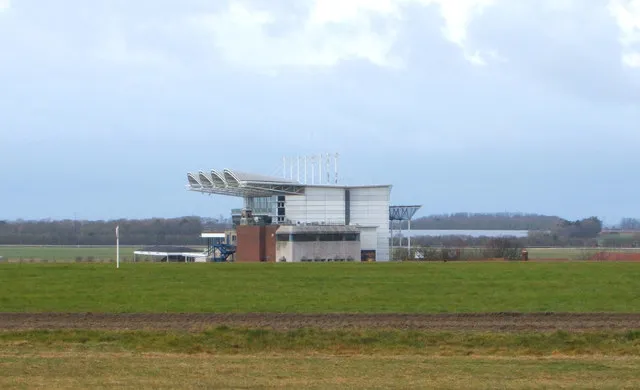
On the Rowley Mile, the rail along the finish straight gives you the last two furlongs in close-up. On the July Course, the same strip offers shade, a breeze and the peculiar pleasure of watching a field come at you out of the trees. Either way, you're closer to the action than most people will ever get at any other sport for the price of a standard admission.
Picking your spot, and earning it
Arrive early. Not absurdly early — half an hour before the first is plenty on a quiet Tuesday — but don't expect prime rail at the furlong pole ten minutes before the off on a Saturday in high summer. Someone will already be there, and they will have been there since the gates opened.
The best spots, roughly in order of demand:
- The finish line. Obvious, crowded, worth it once.
- The furlong pole. Close enough to see faces, far enough to watch a horse quicken.
- Just past the winning post. Underrated. You get the pull-up, the unsaddling walk, the exhausted heave of a horse's flanks, and the jockeys' exchanged words.
- The Dip. For the connoisseur. Horses disappear briefly and reappear, and the groundswell of noise tells you what happened before your eyes do.
Once you've picked a spot, the first rule is simple: don't colonise. A folded jacket, a rucksack and a plastic pint glass spread out like a picnic blanket is not a reservation. Take up the width of your shoulders and no more. If you've got a group, accept that you'll stand in a line rather than a huddle, or someone will spend the afternoon staring at the back of your hoodie.
The binocular code
Binoculars at the rail are a joy and a menace. The joy is picking out the silks in the far straight. The menace is the elbow.
A few practicalities. Keep your elbows tucked and raise the glasses close to your eyes, not out in front of you like a periscope. If you're tall, be aware that your elbows are at exactly the height of a shorter neighbour's face. If you're short, ask politely to slip in front rather than sighing loudly for twenty minutes — most people will shuffle.
And resist the urge to narrate. "He's gone to the front, he's gone to the front, no, wait, he's not gone to the front" is not commentary; it's a hostage situation for the person beside you.
Cheering: timing, volume and the neutral roar
Newmarket crowds are strange things. Half the rail will be roaring home ahorse they backed at 8/1 on the way in; the other half will be silent, watching with the calm of people who have seen a lot of horses finish second.
There's no rule against noise. There is a rule against noise directed at individuals. Shouting encouragement at a jockey is fine and traditional. Shouting at a jockey who has just given your selection an educational ride is not, and the person next to you may well know their family.
A useful guide: cheer the horse, not the payout. And if your horse wins by a street and the person beside you is quietly folding a betting slip, keep the celebration to a handshake and a grin. Nobody at the rail will think less of you for a bit of restraint. They may think considerably less of you for a prolonged one-man pitch invasion.
Photography without becoming a tripod
Everyone's phone is a camera now, and that's fine. What isn't fine is the slow-motion pan that involves leaning backwards into the row behind you, or the monopod that appears at the two-furlong pole with the stealth of a mortar round.
Rules of thumb:
- Frame your shot before the race starts. Once they're coming, you've got about four seconds and no time to fiddle with settings.
- Don't hold the phone above head height if you're in the second row. You'll get a lovely video of the back of someone's cap.
- If you must use a proper lens, stand at the back of the rail crowd, not the front. Long lenses need elbows.
- When the race is over, look up. The photo will still be there. The moment won't.
Weather, food and the small mercies
Umbrellas at the rail are a negotiation. A brolly is tolerable if it's actually raining and you're at the edge of the crowd; it is not tolerable as a sunshade on a cloudy day eight inches from someone's eye line. If the forecast is genuinely grim, a hood and a decent jacket will make you more friends than a golf umbrella ever will.
On refreshments: holding a pint is fine. Resting it on the rail is not — it will go over, and it will go over somebody. Likewise, a tray of chips being passed along a packed rail is a feat of engineering best attempted by professionals.
The post-race exodus
Here is where newcomers give themselves away. The race ends, and they turn around and walk directly into the crowd behind them, causing a small polite avalanche.
The code is this: the rail stays put until the field has pulled up and the crowd has exhaled. Give it a beat. Then, if you're leaving, move sideways along the rail first, find a gap, and step back into the flow rather than against it. Announce your intention with a quiet "coming through" and a hand on a shoulder rather than a rugby hand-off.
And one last thing, the one that overrides all the others: if a loose horse comes down the rail, you get back from it. No photograph is worth it, and the person who pulls you clear will be doing you a favour, not spoiling your afternoon.
The whole code, in one line
Stand your ground for the race, not the afternoon. Watch closely, cheer generously, keep your elbows in and your umbrella down — and remember that the person beside you has paid for exactly the same view as you have.