Long Straight, Summer Garden: How to Choose Your Newmarket Racecourse
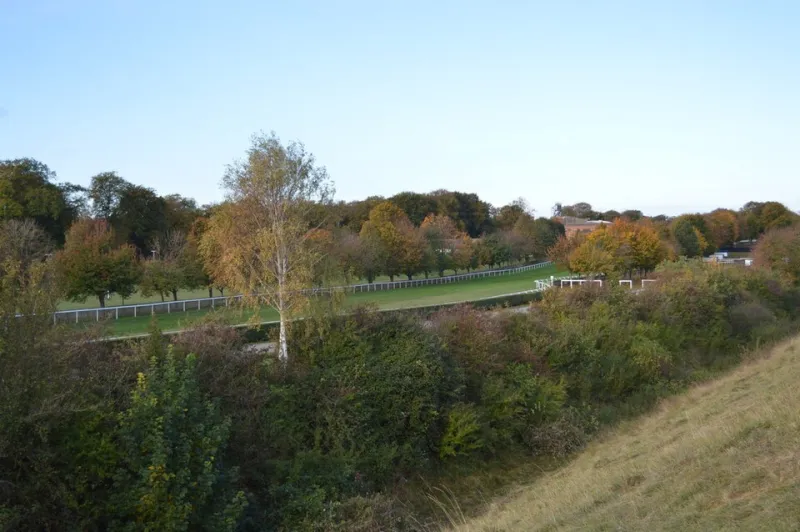
Photo: N Chadwick , CC BY-SA 2.0, via Wikimedia Commons
Newmarket has a funny habit of asking newcomers a simple question and then watching them panic: Rowley Mile or July Course? They are both Newmarket. They are both proper racing. They are even, roughly speaking, neighbours. But they are not interchangeable, and treating them as one venue is the quickest way to book the wrong day out.
Think of it less as choosing a racecourse and more as choosing a mood. The Rowley Mile is the wide-open, big-sky, long-straight experience. The July Course is the summer garden, the trees, the picnic blanket and the more relaxed hum. Neither is the “real” Newmarket. Together they are the town.
Start with the calendar, not the grandstand
If your date is already fixed, the course is usually fixed too. The July Course does the summer work, including the July Festival. The Rowley Mile carries the spring and autumn fixtures, from the Guineas meeting to the Cambridgeshire and the later-season cards. In 2026, as ever, the fixture list is the first thing to check — not the ticket upgrade page.
If you are flexible, choose by season. A warm-weather day with a mixed group who want to wander, eat outside and not take things too seriously leans July Course. A spring or autumn Saturday with a big-race feel, a coat and a proper sense of occasion leans Rowley Mile. Midweek? Either can work, but the July Course in high summer has a gentler, holiday-ish rhythm that suits a quieter visit.
Atmosphere: grand occasion versus garden party
The Rowley Mile feels like scale. The straight is long, the sky is big, and the stands give you that proper racecourse sweep. On a feature day the roar carries in a way that makes the hairs stand up. On a quiet day it can feel spacious to the point of brisk — which some people love and others find a bit exposed.
The July Course feels more enclosed, more green, more like a summer gathering that happens to have top-class racing attached. There are trees, grass, places to perch, and a general sense that you can take your time. It is not “casual” in the sense of scruffy. It is casual in the sense that you can relax without feeling you have wandered into a formal function.
Viewing and the shape of the day
The Rowley Mile rewards people who like to see the race unfold. The elevated stands give you a long view, and the finish has a satisfying sense of theatre when the field arrives. Take binoculars if you have them, especially on a breezy day when you want to pick out colours early.
The July Course is more intimate. You are closer to the greenery, the parade ring and the general bustle, and the day feels less like a viewing operation and more like a wander. That suits first-timers who want to see horses, have a bet, find a drink and not spend the whole afternoon squinting into the distance.
Enclosures and budget
Both courses offer a range of enclosures, from the smarter Premier options to more relaxed Garden or Grandstand and Paddock areas. The important thing is to check what your ticket actually includes in 2026 — especially if you are planning a picnic, want access to a particular stand or are bringing people who will drift between the betting ring and the bar.
As a rough guide, the July Course is the easier place to build a budget day around a picnic and a roam. The Rowley Mile can feel more stand-based, so you may end up spending more once you are inside. Neither is cheap if you buy everything on the day. Decide before you go whether this is a packed-lunch day or a proper treat day, and book the enclosure to match.
Weather exposure
The Rowley Mile is famously open. That is part of its drama, but it also means wind and rain can find you on the walkways and in the less sheltered spots. Layers, a waterproof and sensible shoes are not romantic advice; they are practical advice.
The July Course has more trees and hedges, which takes the edge off a bright breezy afternoon, but do not mistake that for a roof over your head. It is still an outdoor race day. If rain is forecast, choose an enclosure with cover rather than assuming the course will hide you.
Food, drink and the picnic question
The July Course lends itself to the picnic mindset — blanket, boots, something nice in a cool bag and a slow wander. Check the rules for your enclosure before you load the car, because picnic and alcohol policies vary. The Rowley Mile feels more naturally suited to grabbing food from the outlets and watching from the stands, though there is still room for a proper sit-down if you book ahead.
Travel and the last mile
The two courses are separate sites, so do not assume one shuttle, one taxi rank or one car park covers both. Newmarket station is a taxi or a decent walk from the town centre, and the racecourses are outside the middle of things. Book your return travel before the last race, especially on a big day. If you are in a group, agree a meeting point that is not “by the bar” — you will never find each other.
A simple decision map
- Warm-weather day, mixed group, picnic plans: July Course.
- Spring or autumn feature day, big-race atmosphere, tradition: Rowley Mile.
- Quiet midweek visit: whichever has the fixture; July Course in summer is especially easy-going.
- First race meeting ever: July Course for a forgiving, wandering day; Rowley Mile if you want the grand-scale version.
- Rain forecast: pick the enclosure with cover, not the course with the prettier postcode.
The one-course myth
The biggest mistake is assuming you have “done Newmarket” after one visit. You have done one Newmarket. The other course will give you a different day: different light, different rhythm, different walk from the car. Pick according to the season, the forecast and the people you are bringing. Then go back and try the other one.