Ears Before Eyes: How Sound Sets the Pace of a Newmarket Race Day
Most race-day guides tell you where to look. This one asks you to listen. At Newmarket, the day has its own soundtrack, and once you tune into it, the whole fixture starts to make more sense. The trick is not to fight the noise but to use it: the horsebox hum tells you the morning is turning into afternoon, the parade ring hush tells you the next race is close, and the finish-line roar tells you exactly when to stop talking and start watching.
Before the gates: the horsebox hum
Long before the first race, Newmarket has a low-level soundtrack that has nothing to do with the tannoy. It is the rumble of horseboxes, the clang of tailgates, the short bursts of instruction from handlers and the occasional skitter of hooves on concrete. If you arrive early enough, this is the sound of the meeting being assembled.
For racegoers, it is a useful alarm clock. When the boxes are still arriving in a steady stream, you have time for a coffee, a racecard scan and a slow lap of the stands. When the flow thins out and the stable staff start walking horses away towards the pre-parade ring, the clock has quickened. That is your cue to finish the pint, pocket the phone and head for the parade ring rather than the queue for chips.
The parade ring hush
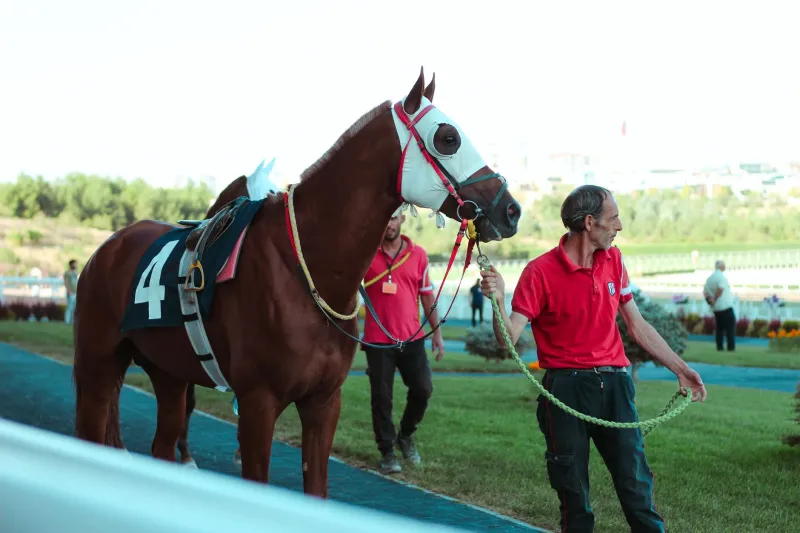
The parade ring has a sound all of its own, and it is not silence. It is a collection of small noises: hooves on the ring surface, the jingle of a bit, a trainer’s quiet word, the rustle of a racecard being folded for the tenth time. Then, just before the horses leave, the crowd drops its volume. Not completely, but enough to notice.
That hush is the best timing device on the course. If you want the proper parade ring experience, stand near the exit rather than the entrance. You get the horses walking past close enough to hear their breathing, and you get the moment when the handlers step in and the ring begins to empty. From there, you can follow the flow towards the track without feeling like you are missing something. If the hush has already passed and the ring is half empty, do not panic: you have just enough time to reach the rail before the field is called.
Betting ring buzz and the tannoy
The betting ring is where the soundtrack gets busier. It is a layered noise: bookmakers calling prices, punters comparing notes, the clack of a satchel, the odd cheer when a price disappears. It is not a place for quiet reflection, and that is the point. The buzz rises as the race approaches, then dips sharply once the stalls are loaded or the tapes are about to go up.
Use that dip. If you are new to betting, the betting ring is easiest to navigate before the buzz peaks. Ask your question when the bookmaker is still setting up or between races, not when the field is loading and everyone is trying to get one last bet on. And listen to the tannoy, but do not let it rule you. The course commentary is the official thread, while the betting ring is the local chatter. When the two start overlapping, you are close to the off.
The walk to the rail
The walk from the parade ring to the rail has its own rhythm. You hear snippets of commentary, the soft thud of feet on tarmac, the crackle of a radio, the occasional roar from a far side of the course. At Newmarket, the wind can play tricks with sound. On a breezy day, the commentary drifts in and out, so it is worth finding a spot where you can see the big screen as well as hear the call. The rail near the finish line is obvious, but it is also the busiest. If you want a little more room and a clearer sense of the field approaching, move a furlong or so down the rail and listen for the rising noise from the stands behind you. That swell is your warning that the race is about to get serious.
The roar and the aftermath
The finish-line roar is not a single sound. It starts as a murmur, becomes a collective intake of breath, then breaks into a wall of noise that rolls back across the course. If you are standing in the wrong place, it can catch you out. If you are listening for it, it is the most reliable signal of the day. When the roar begins, stop walking. When it peaks, look at the track. When it fades, you have about a minute before the next wave of chatter, congratulations and commiserations begins.
After the race, the sound map changes again. The tannoy returns with the result, the betting ring starts settling up, and the parade ring begins preparing for the next lot. That is the point to move. If you want to beat the crowd to the bars or the exits, leave as the result is being confirmed rather than waiting for the last announcement. If you want the atmosphere, stay put and listen to the post-race debriefs around you. Both are valid. Just choose before the roar fades, not after.
A simple sound timetable
You do not need a stopwatch to use the soundtrack. Roughly speaking, the day moves from horsebox rumble to parade ring hush to betting ring buzz to finish-line roar. The gaps between those sounds are your breathing space. Use the early rumble to settle in, the hush to find the parade ring, the buzz to place a bet or soak up the atmosphere, and the roar to get to the rail. When the tannoy starts repeating itself and the horses are walking away, the next cycle has begun.
Newmarket is a course that rewards attention, and not all of it is visual. Listen for the small changes and you will find the day unfolds at a more comfortable pace. You will still miss things, because everyone does, but you will miss fewer of the good bits.