The Pre-Race Show: A Newmarket Parade Ring Primer
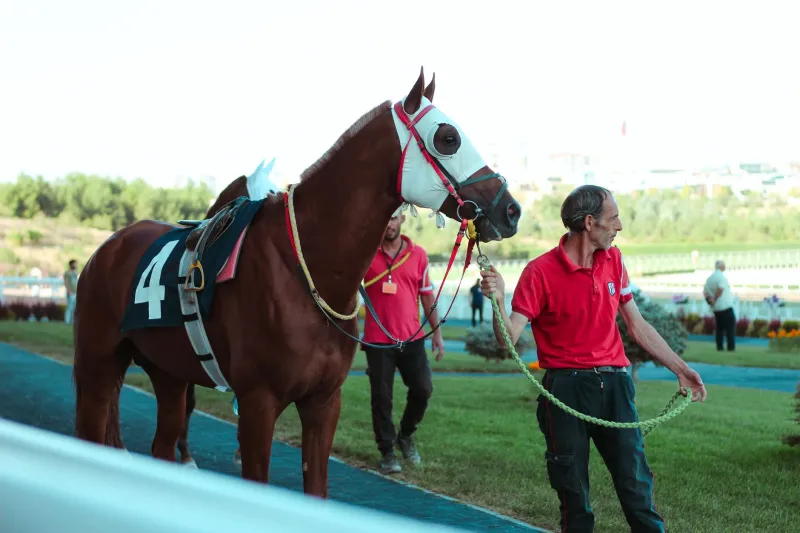
There is a moment at Newmarket, usually about ten minutes before the off, when the crowd drifts towards the parade ring and the chatter drops a notch. The numbers go up, the handlers lead the horses in, and everyone suddenly looks like they know what they are doing. The good news? You do not need a form book the size of a laptop to join in. You just need a bit of patience and a rough idea of what you are looking at.
This is not a tipping guide. Treat it as a field guide to the pre-race show: a way to watch the parade ring with more confidence, ask better questions and get another layer of enjoyment out of a day at the Rowley Mile or the July Course.
Start with the walk, not the form
Before you start squinting at a horse's coat like a detective in a Sunday drama, watch it move. The walk from the pre-parade ring into the main ring is one of the most revealing parts of the whole performance. A horse that strides out evenly, covers the ground without fuss and keeps a reasonably relaxed outline is showing you something useful: it is moving well enough to do itself justice.
You are not looking for perfection. Racehorses are athletes, not show ponies, and a bit of freshness is normal. What you want is a sense of rhythm. Does the horse swing along, or does it shuffle? Does it look like it is saving energy for a job, or expending it all on the way to the start? You will not always get a clear answer, but the walk is a better first impression than a number on a board.
Coat, sweat and the weather
A shiny coat is the classic parade-ring signal, and for good reason. It suggests a horse is in good order and carrying condition well. But do not get too hung up on gloss. A duller coat in November is not automatically a disaster, and a very sweaty horse is not necessarily a lost cause. Context matters.
Cold, windy afternoons can make horses sharp and skittish. Warm, muggy days can leave them clammy before they have done anything. A horse that is sweating up at the pre-parade ring but settles in the main ring is telling a different story from one that is still lathered and agitated as the jockey gets legged up. Look for change: does the horse calm down, or does it get more worked up?
Also, use your eyes and your common sense. If the weather has turned and the horse looks tucked up and tense, that is worth noting. If it looks bright, alert and well covered, likewise. You are building a picture, not filling in a worksheet.
Ears, tail and the art of looking relaxed
Horse language is not an exact science, especially with a crowd, a band and a bloke in a tweed cap asking everyone to stand back. Still, the basics are readable. Ears flicking around are taking in the scene. Ears pinned back can mean annoyance, concentration or simply a horse that has had enough of the person next to it. A tail swishing is not automatically bad, but a tail clamped down and a horse backing off suggests tension.
The key is the overall demeanour. A horse that stands reasonably still, looks interested without boiling over and walks away in a settled rhythm is usually showing a professional attitude. A horse that is on its toes, sweating and trying to climb the handler is more of a question mark, though plenty of good horses have been lively types. You are not judging a beauty contest. You are watching for stress versus composure.
The handler's hands
One of the most underrated parts of the parade ring is the person on the other end of the lead rope. Handlers are not there to give you tips, but their body language is worth watching. A relaxed handler with a loose-ish rein and a horse that is happy to walk beside them is a good sign. A handler who is constantly checking, shortening the rein and repositioning the horse is dealing with something more lively.
You will also see the trainer or a representative nearby, often making a final check of the horse's condition or speaking quietly to the jockey. This is the bit where the parade ring becomes a workplace rather than a stage. Watch how the horse responds to being handled. Does it settle when the handler speaks to it? Does it lean into the contact or pull away? These are small things, but they add texture to what you are seeing.
Jockey clues and the final turn
The jockey joining the horse is the last big visual cue before the race. You are not looking for a secret signal. You are looking for compatibility. Does the horse stand quietly while the jockey gets on? Does it walk off in a straight line, or does it need a bit of coaxing? A horse that takes the jockey smoothly and moves away with purpose looks ready for the next bit.
This is also the moment when the crowd tends to surge towards the rails. Resist the urge to follow immediately. Stay for one last look as the horses leave the ring. The final picture, rather than the first, is often the one that sticks. A horse can be lit up on arrival and settled by the time it leaves. That shift is part of the story.
A few ring-side manners
Newmarket crowds are generally friendly, but the parade ring is not the place for a loud debrief about your each-way double. Keep your voice down, give the handlers room and do not lean over the rail to get a selfie with a horse that is clearly not in the mood. If you are unsure where to stand, follow the example of the regulars: find a spot with a clear view, keep moving if asked, and let the horse and handler pass.
It also helps to remember that the parade ring is not a puzzle to be solved. You are not failing if you cannot tell which horse is about to run a big race. The point is to notice more, not to predict perfectly.
What you can and cannot learn
The parade ring can tell you about condition, temperament and readiness. It cannot tell you whether a horse has the speed to win a competitive handicap, whether the ground will suit or whether the race will fall apart. That is why the form book exists, and why even the sharpest paddock watchers still get it wrong.
What the ring does give you is a richer race day. You will start to recognise the difference between a horse that is calm and one that is switched off, between a handler who is struggling and one who is simply keeping a lively horse in check. You will have something to talk about between races that is not just the price of a pint.
So next time you are at Newmarket, give yourself an extra ten minutes before the off. Wander down to the parade ring, pick a horse, and watch the walk, the coat, the ears and the handler. You might not leave with a winning ticket, but you will leave knowing you watched the race-day show properly.