Hoofprints Through the High Street: A DIY Walk Through Newmarket's Racing Past
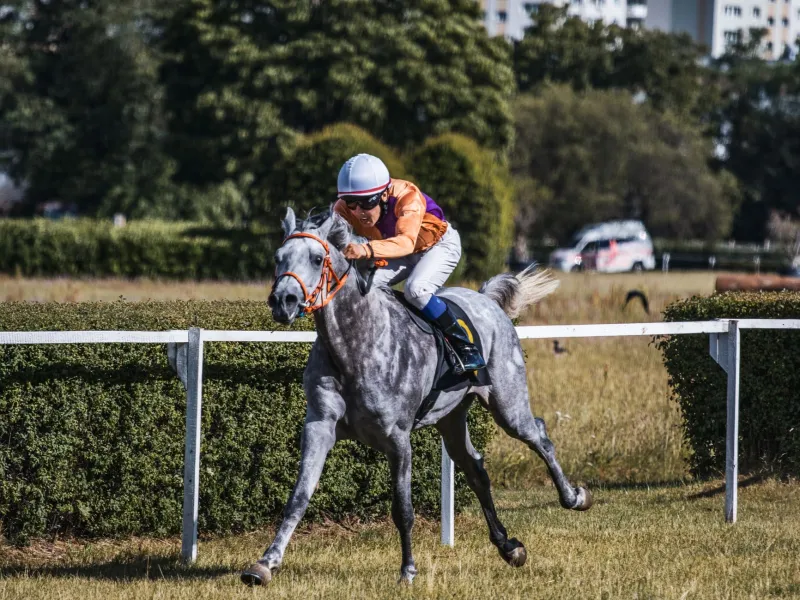
Most people arrive at Newmarket, watch the racing and leave again, which is a bit like visiting Oxford and only seeing the car park. The town itself is the oldest and most concentrated piece of racing geography on earth — a place where the sport isn't an attraction bolted onto a settlement, but the reason the settlement exists at all.
This is a walking loop you can do on a non-race day, on the morning of a meeting, or the day after one when you've got a few hours to kill before a train. It's about three and a half miles at an unhurried pace, and it works in either direction.
The route at a glance
- Palace House, Palace Street — museum and starting point (allow two hours, or one if you're brisk)
- High Street — the Jockey Club Rooms, the clock tower, the war memorial
- Bury Road — stable yards, The Severals
- Warren Hill and the heath — the training grounds, ideally before 10am
- Tattersalls, Park Paddocks — outside the sales ring
- The July Course and the Devil's Dyke — finishing on the old earthwork
Start where the crown did
The National Horseracing Museum sits inside Palace House, and the building is the first piece of evidence you need: it stands on the site of Charles II's Newmarket palace. The Merry Monarch effectively moved his court here in the seventeenth century, bringing courtiers, gamblers and hangers-on to a small Suffolk market town and turning it into the headquarters of English racing in the process. The Rowley Mile takes its name from Old Rowley, the king's nickname for himself and for a favourite hack — so every time you hear the course name, you're hearing a Stuart in-joke.
The museum's galleries cover the whole arc of the sport, from the earliest match races to the modern training yards, and there's a retraining centre for former racehorses on site. It's worth doing properly before you walk, because the rest of the route is context for what you've just read.
Down the High Street, where the rules were written
Turn out of Palace Street and head for the wide, oddly grand High Street. The Jockey Club Rooms dominate it — a private club whose origins go back to the 1750s, and the institution that effectively governed British racing for two and a half centuries. You can't go in without an invitation, but you can stand outside and appreciate the sheer institutional weight of the place, and the fact that a small Suffolk town once set the rules for a national sport from this stretch of pavement.
Further along, the Victorian clock tower marks the heart of the old town, and the war memorial carries the names of the town's own. Between them there's coffee, a decent bakery and the sort of shop that sells riding gloves next to greetings cards.
Up Bury Road into the working town
Head north-west along Bury Road and the character changes completely. This is where the yards are: doorways wide enough for a horse, muck heaps, hay deliveries, lads and lasses in breeches at seven in the morning and again at four. It is a working industrial landscape, just with a different product.
The Severals, the wide open grass off the road, has been grazing and exercise ground for centuries. Keep an eye on your surroundings and give way — horses have right of way here in practice, whatever the sign says.
Warren Hill, the great theatre of the morning
Climb towards Warren Hill and you reach the part of Newmarket that racegoers never see from the stands. The heath runs to thousands of acres of training ground, and from first light it's full: strings of horses in single file, head lads calling the pace, a hundred small dramas playing out before most of the country has had breakfast.
Time your walk for early morning — before about ten — and you'll catch the bulk of it. Stand still, keep to the edge of the gallops, and don't walk across a strip of grass that has clearly been prepared for something. The all-weather strip up Warren Hill is the town's most famous stretch of ground, and a horse working well up it is a sight worth getting up early for.
The sales ring, and the money side of the game
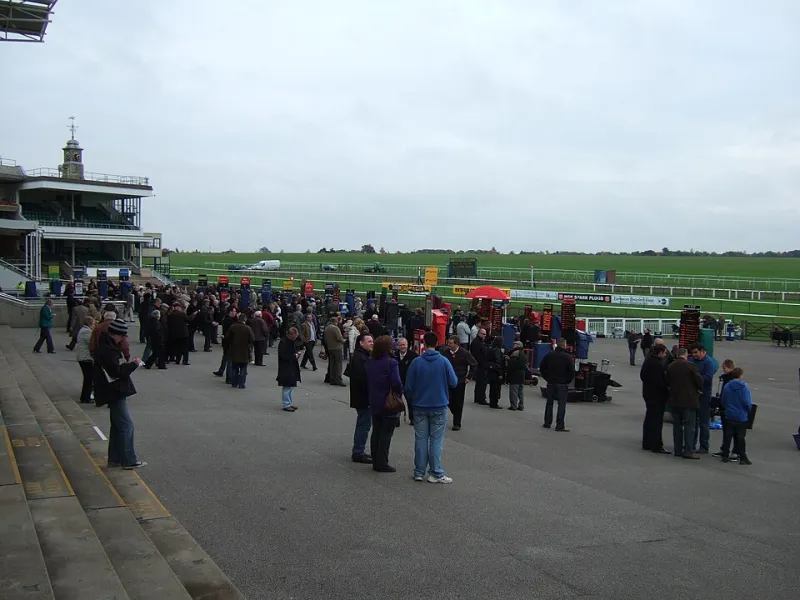
Drop back into town and out towards Park Paddocks, home of Tattersalls, the bloodstock auctioneers who have been selling horses since the eighteenth century. On a quiet afternoon it's just a large, gated complex. On a sales day it's a completely different town — buyers from Japan, Ireland, the Gulf and Kentucky, agents with catalogues, yearlings walking the ring, and sums of money being spent that would buy whole streets of the houses you've just walked past.
The December Mares Sale is the big one, but the autumn yearling sales are the ones that shape the following season's Classic fields. You can usually watch the ring as a visitor; check the sale schedule before you set off.
Finish on an earthwork older than the sport
End the loop by wandering out towards the July Course and the Devil's Dyke — an Anglo-Saxon defensive earthwork that cuts across the heath and predates every stable, every grandstand and every Derby winner by more than a thousand years. It's a useful reminder that Newmarket's racing identity is a relatively recent layer on a much older landscape, and that the town was a crossroads long before it was a racecourse.
Practical bits
Bring boots you don't mind ruining — the heath is beautiful and muddy in roughly equal measure. The full loop takes three to four hours with the museum included, and there's a shorter version if you're pushed: museum, High Street, Warren Hill, back. Sundays and Mondays are quiet on the gallops as many yards take their day off, so pick a weekday morning if watching the strings is the point of the trip. Guided options exist through Discover Newmarket if you'd rather have someone else do the talking, and there are organised visits to the National Stud, which sits just outside town.
Above all, don't treat the walk as homework before the real thing. For a lot of people, this loop is the real thing, and the racing on the day is the bonus.